Interior Spaces
Blue Above, Blue Below
Blue painted wood floors are synonymous with the Fire Island home, but where did it come from?
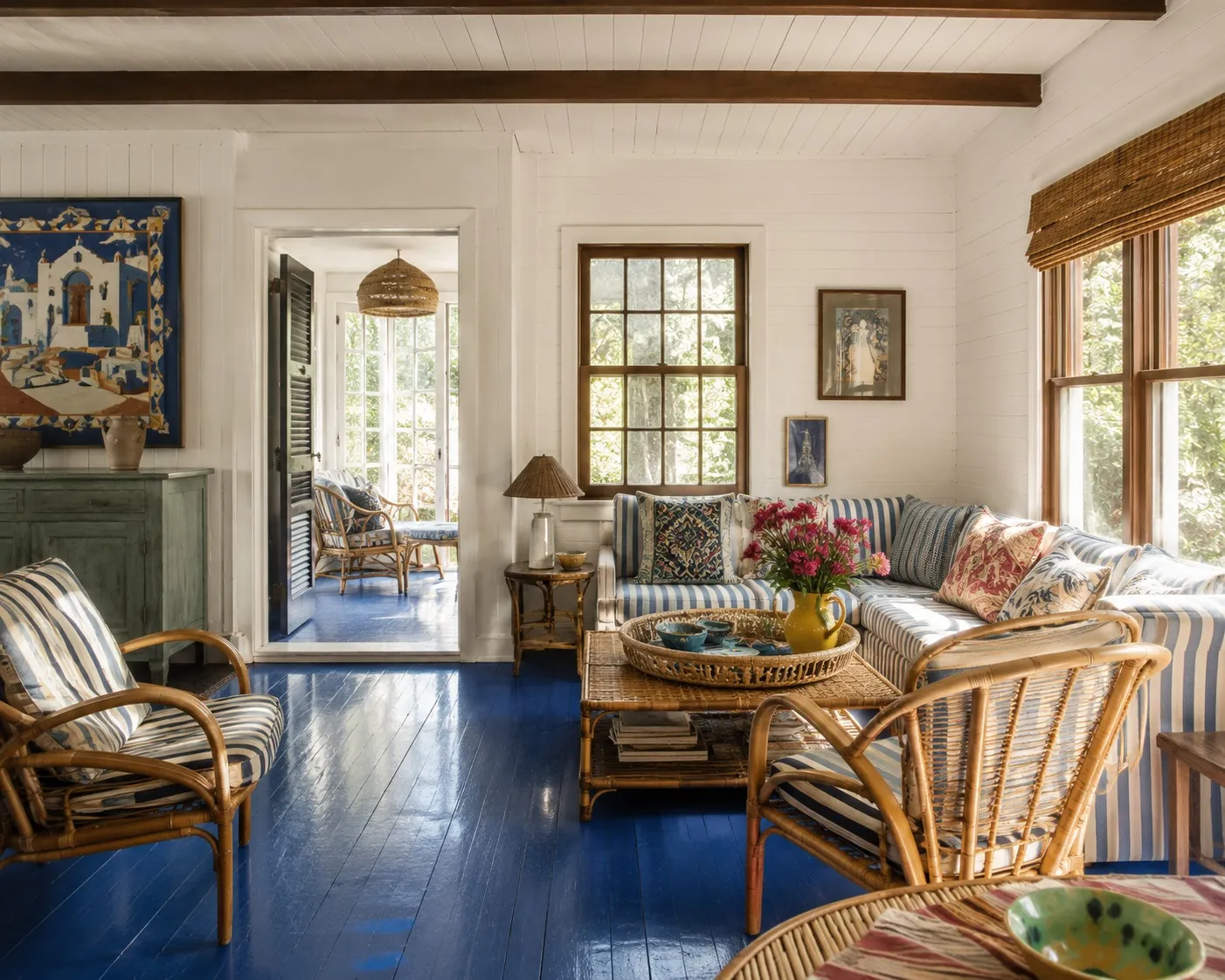
Walk into almost any old Fire Island cottage and look down: there is a fair chance the floor is blue. Not a timid blue, either—a glossy, unapologetic marine blue, applied in coats of porch-and-deck enamel and renewed each spring the way other households change storm windows.
The tradition arrived, as most island traditions did, by boat. Painted floors were a maritime habit long before they were a decorating one. Deck enamel was cheap, nearly indestructible, and forgiving of everything a summer house endures—sand, salt, wet bathing suits, decades of bare feet. When the first cottages went up along the beach, their builders finished the floors with what the harbor already stocked.
In the American South, a related custom painted porch ceilings a pale “haint blue” to ward off spirits and, so the story goes, to fool wasps into believing the ceiling was sky. Fire Island’s blue runs deeper and darker, and its logic is less superstition than reflection: on an island where the bay lies a few hundred feet from the ocean, a blue floor holds the water’s color indoors. Ceiling white, floor blue—sky above, sea below—the house becomes a day at the beach in section.
There is a practical genius to it that modern renovations often discover the hard way. Sanded and sealed, an old pine floor announces every scar. Painted, it forgives them—and asks only a fresh coat when the ferry schedule thickens in May.
When we restore a cottage with its blue intact, we keep it. When we build new, we sometimes propose it, and we have learned to make the case plainly: some colors are decoration, but this one is memory. It is the color of an island that has always known exactly where it stands—between one blue and another.